
Most Instagram advice for businesses starts with what to post. Post reels. Post three times a week. Post behind the scenes.
None of that is wrong. It is just second, and almost nobody says so. Posting is how a stranger finds you. What decides whether they contact you is the ten seconds after they tap your name, when they land on your profile and try to work out what you do, who you do it for, and whether you are still trading.
Plenty of businesses post consistently and get nothing back, because every visit ends on a profile that answers none of those questions. This is the order we work in, and the reasoning behind it.
The ten seconds that happen on your profile
Someone sees one post. They tap your name. Now they are on your profile, and they are not browsing, they are checking.

A stranger decides here, in about ten seconds, whether you are worth messaging.
Three things have to be obvious in that moment: what you sell, who it is for, and how to reach you without hunting. Most business profiles get none of them right. The bio describes a feeling rather than a service. The highlights are empty or full of last year's events. The button goes to a link that asks for three more clicks.
Go and look at yours the way a stranger would. Open it on a phone, logged out, and read your bio aloud. If it does not name the thing you actually sell and the kind of customer you want, it is decoration.
Then check the boring parts, because they do the most damage when they are wrong:
- The first line of the bio. Say the service and the market plainly. Clever taglines cost you the people who were nearly convinced.
- Highlights. Three is enough: what you do, proof it worked, and how to start. Named clearly, not with icons only you understand.
- Pinned posts. Your three strongest pieces of proof, not your three most recent posts.
- The contact button. Tap it yourself. See where it lands and how many steps stand between that tap and a message.
- The most recent post. If it is three months old, everything above it stops counting.
Rhythm is what makes a business look open
After the profile, the thing that matters most is not quality. It is regularity.
A feed that posts four times in one week and then goes quiet for a month reads as a business that might have closed. A feed that posts twice a week, every week, reads as one that is open and busy. The second is easier and works better.
That is also the honest reason batching wins. Sitting down once, planning a month, and approving it in one go takes less time than deciding what to post every few days, and it survives the weeks when work gets busy. Our own clients approve a month of posts in about twenty minutes.
What to post when your work is not photogenic
This is where most B2B and service businesses stall. There is no product to photograph, so nothing gets posted.

Filmed on a phone, where the work happens. That is the whole production budget.
The work itself is the content. What reliably earns a reply:
- The question a client asked this week, and your actual answer. If one person asked, a hundred were wondering.
- The job in progress. A screen, a workshop, a site, a before and after. It does not need to be beautiful, it needs to be real.
- The person doing the work. People hire people, and B2B buyers are the most person-driven of all.
- The mistake you keep seeing. Say what it costs and how to avoid it. This is the post that gets saved and sent to a colleague.
- Plain proof. Describe what changed for a client in normal words. No invented percentages. Anyone can spot a made-up number, and it undoes the rest.
What consistently does nothing: quotes on gradient backgrounds, holiday greetings, and posts that announce you are excited to announce something.
Conversations happen in stories and DMs, not comments
Comments are the part everyone watches and the part that matters least. The enquiries arrive in the inbox.
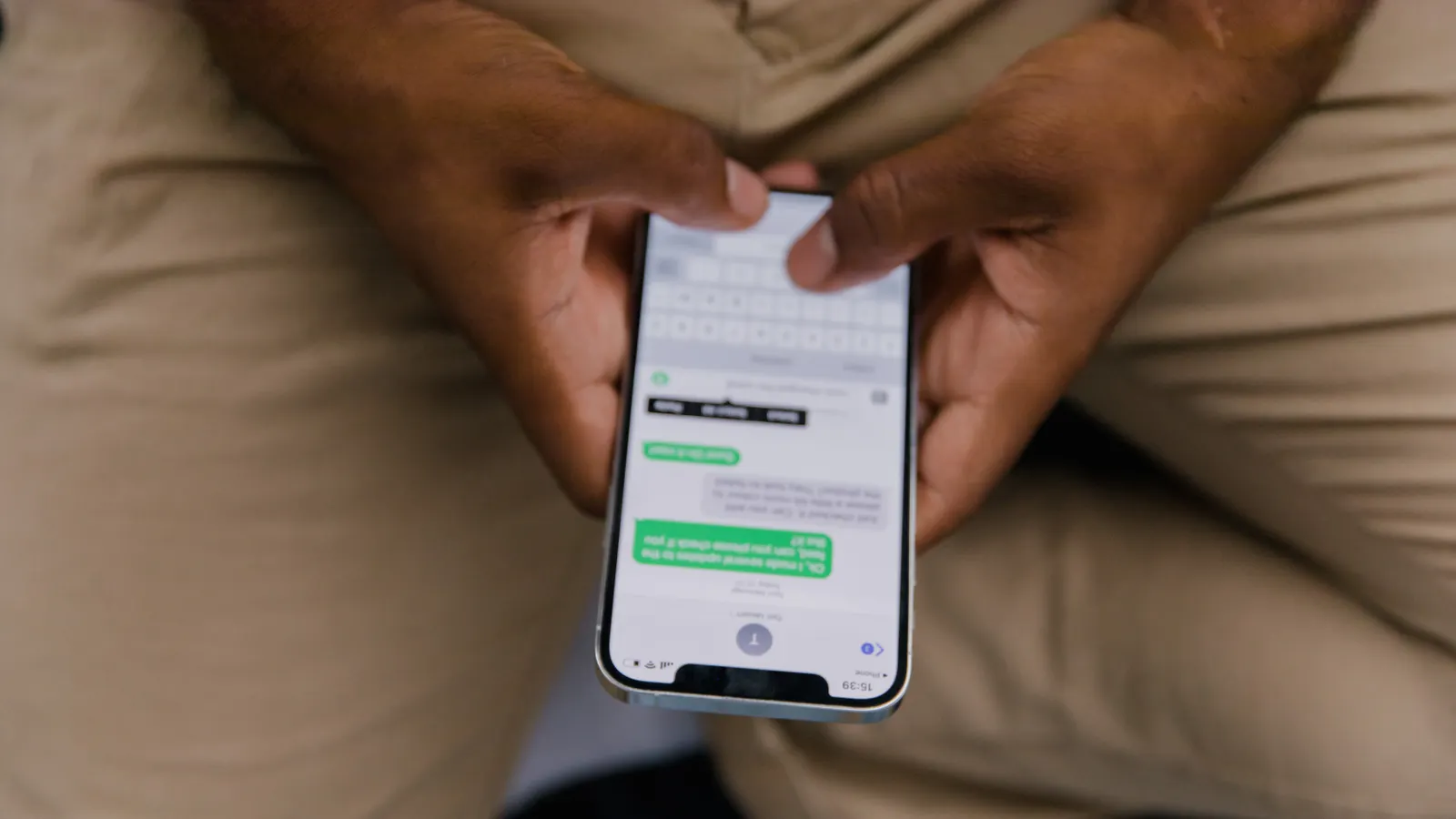
Most enquiries land here, quietly, from someone who never commented on anything.
Stories are the cheapest trust you can build: near-daily, unpolished, filmed in ten seconds. They also give people something safe to reply to, which is how a silent follower becomes a conversation.
Then treat the inbox like a business line, not a social app. Answer within the working day. Keep two or three saved replies for the questions you get constantly, then write the rest yourself. And end with an actual next step, because "let me know if you need anything" ends more conversations than it starts.
In Estonia, write both languages properly
If your customers are local and international, post in Estonian and English. Not one machine-translated underneath the other. Write both, keep both short.
Everything in one language loses half your audience, and a bad translation loses the half you kept.
FAQ
How often should a business post on Instagram?
Twice a week, every week, is enough for most businesses, and is far better than five posts one week and nothing the next. Daily stories matter more than daily posts. Pick a rhythm you can hold through a busy month, because consistency is what makes you look open.
Do hashtags still matter?
Much less than they did, and never enough to save a weak post. A few specific, relevant tags are fine. Thirty generic ones look like spam and do not fix content nobody wants to save or send to someone else.
Should we pay to boost posts?
Only once the profile and the rhythm are right. Paid reach sends more strangers to your profile, so it multiplies whatever is already there. If the profile does not explain what you sell, boosting simply buys you a larger audience for a page that cannot convert them.
The short version
Fix the profile, then the rhythm, then the content, then the conversations. In that order, because each one only works when the one before it does.
If you would rather see it written down for your own account, our free marketing audit reads your Instagram by hand and sends back the fixes in the order we would do them. If you want the posting handled as well, see what that looks like.
Photos by Kampus Production, Kaboompics, Blue Bird and RDNE Stock project on Pexels.